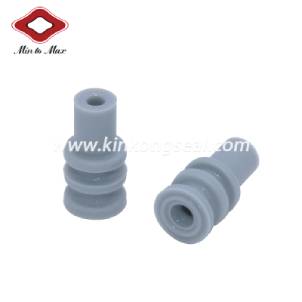
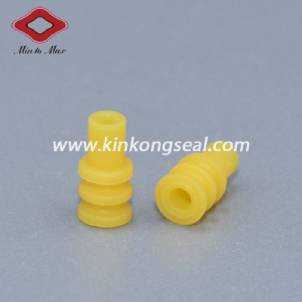
Where To Use Rubber Grommets In Auto Industry

If this is the first time you have heard of rubber grommets, don’t be afraid, because we are sure you have seen them at least once in your life.

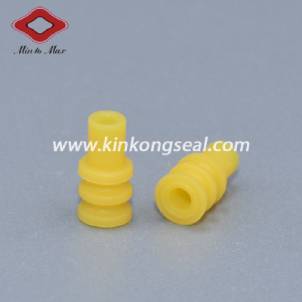
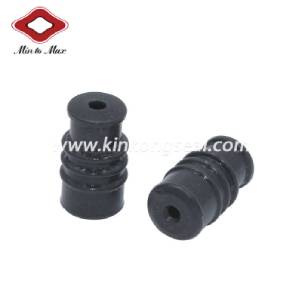
rubber grommet is a small round tube or hole, which is mainly inserted into a hole in thin material such as wood, metal, or plastic. The rubber grommet refers to the small hole on the shower curtain and the small things on the rubber shoes.

We use rubber grommets in our daily lives; this is the convenience of these gadgets. Their uses for them are limitless, and they play an important role in multiple industries. Rubber grommets are mainly found in the construction industry and are used to cover up the rough and sharp edges of metal holes. They are used to protect another material and should be through the rubber grommet.

They are mainly used to safely pass wires through holes in metal or other materials.

But another very important industry for them is the automotive industry. Rubber grommets have many uses in automobiles. They are mainly used to protect circuits, wires, and cables from scratches on rough surfaces. Rubber grommets are also used to seal important valve body applications and various under-hood applications.

Important features of rubber grommets

Rubber grommets have more uses in daily life and in the automotive industry.

Some of the most important features of these projects are:

Good weather resistance

They are less negatively affected by UV rays

Rubber grommet has strong heat resistance

They will not crack or loosen

Rubber grommet can resist tearing

Very fast and easy to install

More ergonomic, because you don’t need to screw them in place manually

They are very economical and practical solutions to many problems in the automotive industry

What are their uses in the automotive industry?

Rubber grommets have practical applications in the automotive industry. One of their main uses in this area is to seal important engine components and body applications. Because they are small and practical, they work best in small spaces or small areas with limited space usage.

The engine is the most important part of a car, and there are many wires and cables running through it. Rubber grommets are used to protect these cables and wires from severe engine vibrations. As you know, repeated shaking or vibration of the most important wires and cables can cause catastrophic problems for your car.

This is why rubber grommets are mainly used to separate these cables and wires from each other to prevent them from repeatedly colliding or rubbing against each other. If there is no rubber grommet, the cables and wires will eventually wear out and may even be severe to the engine. This will enable the use of rubber grommets mainly to protect and keep wires and cables in place.

We are rubber grommet manufacturers. If you are interested in our products, please feel free to contact us.
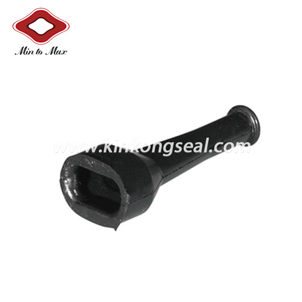
Rubber Grommet
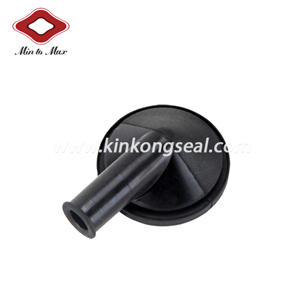
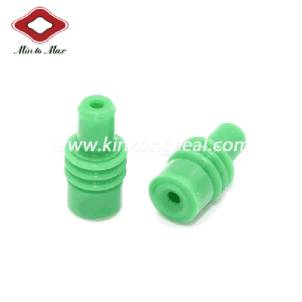
Rubber Grommet

What Is a Rubber Grommet?

When you drill or punch holes in metal or other substrates, sharp edges are created, which may be dangerous to the materials that need to pass through these holes. Usually, these holes are necessary for wiring, pipes, hoses, ropes, air ducts, or other components that are indispensable to performance. These elements need to be protected to prevent the sharp edges of the holes through which they pass to ensure continued operation.

This is the purpose of the rubber grommet. The rubber grommet is a bendable part with a collar to fix it in the hole. The rubber ring forms a mechanical buffer between the metal and other components. This can prevent friction and wear between components and metal, resulting in short circuits or leakage and failure. When the wire passes through the metal element, the grommet can also prevent the ground wire.

In addition to protecting parts from cuts and friction, rubber grommets are also used as shock absorbers to create a snug fit between two different parts. These types of vibrating mount grommets protect against compressive forces and also help reduce noise levels. These types of grommets are easy to distinguish-one of their ribs is always thicker than the other, and it is this thickness that provides stability and vibration isolation.

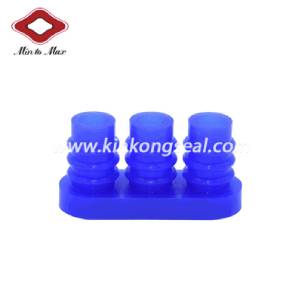
At the same time, grommets with extended necks are often used on electrical appliances where wires enter a unit, and their necks provide some extra stability for the wiring. Rubber grommets are also very suitable for separating components. Multiple component holes allow different components to pass through the same hole on the substrate while preventing different components from contacting or entangled with each other. Finally, the grommet helps to create the appearance of the finished product, especially in furniture applications.

An appropriately sized rubber grommet will be easy to locate and should fit firmly into the panel hole. Their size can be adapted to all types of holes and all types of components, with different inner and outer diameters and groove widths. An appropriately sized metal grommet will provide protection for other components except for the one that passes through the interior – especially in electronic applications, the grommet helps to seal the gap and prevent air, water, and dirt from affecting the through holes and connections or other Components.

Rubber gaskets can be made from a variety of rubber compounds, depending on the specifications required, from silicone to nitrile rubber. This allows different hardness levels to cope with different substrates, depending on the expected stress level. If necessary, you can also use specially formulated compounds to combat overheating and fungus. The highest specification materials are also resistant to oil and UV rays and provide the best protection for sensitive components.

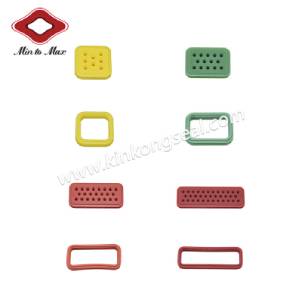
The rubber grommet is not completely round either. Thanks to this production method, rubber can be molded to fit odd shapes, including oval, square, or square circles. Rubber grommets are resistant to tearing, abrasion, rust, and corrosion, making them a high-quality long-term solution.

We are Rubber grommets suppliers. If you are interested in our products, please feel free to contact us.

Rubber Grommet
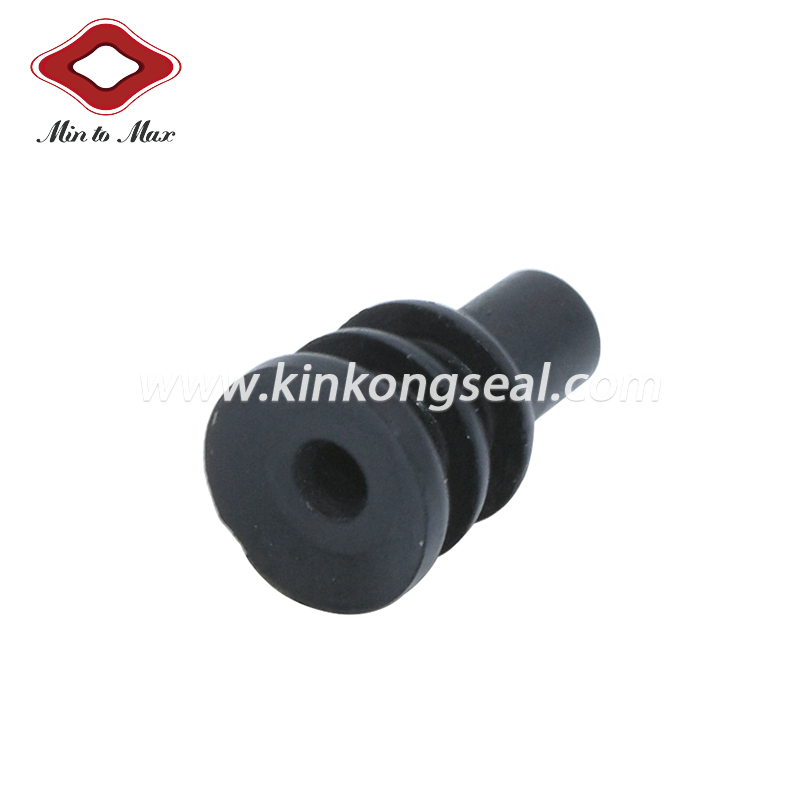
The Main Reason For The Failure Of Silicone Seals

Although the current level of technology is very high, there are still some shortcomings in the sealing protection technology of many products in actual operation, such as waterproof sealing of mobile phones, waterproof sealing of car lights, etc. One kind of material is our most common one. Therefore, as a kind of seal used in many aspects, silicone seals often have some unexpected functional problems during normal use, which are difficult to achieve. So today silicone single wire seal supplier will take you to understand what are the objective factors that affect it?

(1) Impact of soft hardness

In many cases, the function and structure of the product can be completely changed according to the different softness of the silicone product. Therefore, due to the selection of different softness and hardness of the silicone seal ring during use, there will be stress, stretching, extrusion, and other phenomena. The sealing ring will have some unavoidable problems, such as extrusion gap, excessive force, high hardness, easy deformation of the product, no rebound, etc.

(2) Gap problem

The gap problem can be divided into several factors. One is because of the problem of rubber materials. Due to formulation reasons, many silicone materials have poor resilience. The problem of insufficient tension leads to gaps due to insufficient force during use. Leakage, silicon ring manufacturers processing problems, such as product fragility, resulting in thinning of the product, this kind of problem is prone to this kind of problem. When the product is softened, the rubber material is unfamiliar with the internal protrusions, and it deforms after a long time of tension and compression, causing a gap problem.

(3) The process of stress

O-shaped silicon rings are generally installed in multiple locations, grooves, surfaces, and convex grooves. The installation method of each product is different. The stress process will also affect the service life and function of the product. Therefore, in order to ensure the sealing performance, they will make a reservation here to distinguish different usage methods and different force levels of silicone rubber seals. For example, how much force can be installed on a flat surface to adjust its tightness? Concave and convex types will be affected. The magnitude of the force is the degree of retention when selecting the size.

We provide many products, such as silicone single wire seals, connector seals, and other synthetic rubber parts.

Silicone Seals

Precautions When Repairing Automobiles

Precautions When Repairing Automobiles

When repairing a door with a sealing flange, pay attention to repairing the damaged sealing flange and accurately restoring the shape of the original flange. When replacing the door, be sure to apply folding glue on the flanging occlusion of the inner and outer panels of the new door, and plug some small craft holes left by the tape stamping.

When repairing automobile wiring harnesses, all body holes and hole sealing rings must be installed in place, because these automobile connectors seal not only play a sealing role but also protect the wiring harness. If the seal of the automobile connector is damaged or the wiring harness can rotate or move in the sealing ring, the sealing ring should be replaced, and it should be firmly assembled with the body hole and hole to make the wiring harness stable.

After the window glass is damaged, the curvature of the original window glass should be replaced. At the same time, check whether the glass guide groove and the sealing strip are damaged. Because the window cannot be restored to its original shape after being repaired, at this time, in addition to ensuring that the window can be easily pulled up or lifted, we should pay attention to the sealing around the window when closing the window.

When replacing the roof, apply a layer of conductive sealant to the crimping area around the roof first, and then the sealant should be coated all over the flow tank and joint after welding. This not only helps to seal the car body but also prevents early rusting of the car body due to the accumulation of water in the flange welds. When assembling the door, a whole piece of sealing isolation film should be pasted on the door’s inner panel under the window. If there is no formed sealing isolation film, ordinary plastic paper can be used instead. Then paste the sealing isolation film and compact, and finally assemble the inner panel.

We are automotive connector seal suppliers. Please feel free to contact us if you are interested in our products.

automotive connector seal

Definition and Properties of Silicone Rubber Wire Seal

Rubber products are often used in our daily life, generally to prevent leakage, but do you really know round rubber products? connector cavity plug manufacturer to share with you:

Physical properties of natural rubber. Natural rubber has high elasticity at room temperature, a little plasticity, very good mechanical strength, small hysteresis loss, low heat generation during multiple deformations, so its resistance to flexion is also good, and because it is non-polar Rubber, so good electrical insulation. High elastic polymer compound. Divided into natural rubber and synthetic rubber. Natural rubber is made by extracting gum from plants such as rubber trees and rubber grasses; synthetic rubber is obtained by polymerizing various monomers. Rubber products are widely used in various aspects of industry or life. Rubber seals are a type of rubber products widely used in sealing technology. Because rubber has a valuable elastic polymer material and a wide temperature range, a small deformation in different media will produce a large deformation. This deformation can provide contact pressure, compensate for leakage gap, and achieve the purpose of sealing.

Today we come to understand and understand the silicone rubber wire seal.

Silicone rubber wire seal is formed by microwave vulcanization at one time. The surface is smooth and beautiful, has good elasticity and resistance to compression deformation, weather resistance, ozone resistance, chemical resistance and a wide range of use temperature (-40 ℃ ~ + 120 ℃) and other excellent performance, has been widely used in automotive doors, windows, curtain walls and other manufacturing industries. For products with different shapes, different materials, or requirements for cold resistance, heat resistance, foaming, solid body, and special properties, it can meet the needs of design and use.

1. Auto wire seal has excellent weather resistance, weather resistance refers to the ability to resist long-term cold, hot, dry, and humid, and has excellent corrosion resistance to rain, snow and water erosion, which can be extended. Sealing tape life.

2. Heat aging resistance means strong air aging resistance. It can be used at 100-120 ℃ for a long time, and it can maintain effective physical properties at 140-150 ℃ for a long period of time. It can withstand high temperatures of 230-260 ℃ for a short period of time. To the time-delay effect; coupled with the use of a special formula, the EPDM rubber has a similar feel at -50° C to 150° C, which has created a highly efficient work performance for production site installation.

 Auto Wire Seal

 Auto Wire Seal

3. Since the silicone rubber wire seal has excellent ozone resistance, it is also known as “crack-free rubber”, especially applied to various urban buildings with different atmospheric indexes and completely exposed to the air. Superiority.

4. anti-ultraviolet radiation, to provide high-rise building residents to protect the environment; can withstand the voltage of 60 ~ 150KV, corona resistance, resistance to electric cracks, arc resistance, is also very good. Low temperature elasticity, the temperature when the tensile capacity reaches 100MPa is -58.8 ℃.

5.Because of its excellent physical and mechanical properties, it is often used in the manufacture of aircraft, cars, trains, passenger cars, ships, high and low voltage switch cabinets, glass curtain walls, aluminum alloy heat insulation window sealing parts and diving products, high pressure steam hoses. , Tunnels, overhead bridges and other waterproof parts and other industrial and agricultural sealing parts.

Automobile Wire Seal has Excellent Heat Resistance

Automotive wire seals are not so much the latest automotive wire seal materials, in fact, silicon rubber has a history of decades in China. In the past few years, it was indeed the arrogant of rubber, very delicate. In recent years, the cost has gradually decreased, and it has gradually been applied to building seals. The advantage of silicone rubber over ethylene-propylene rubber for sealing is that it has better compression deformation performance than ethylene-propylene rubber, so the sealing performance is better. From the principle of time-temperature equivalent, silicone rubber can withstand temperatures of up to 300°C and resistance to ethylene-propylene At best, the glue is 180 ° C. At the same temperature, the life of silicone rubber is twice that of ethylene-propylene rubber, and the life is longer.

It has excellent physiological inertness, non-toxic and tasteless. Silicone rubber also has excellent heat resistance, cold resistance, dielectric properties, ozone resistance, and atmospheric aging resistance. The outstanding performance of silicone rubber is that it can be used at a wide range of temperatures and can be used in Long-term use at -60 ° C (or lower) to + 250 ° C (or higher). Therefore, silicone rubber is an ideal choice for building seals in the modern era. In short, the times are constantly improving, China’s automotive line sealing industry should make a brand, bid farewell to the era of low-price competition, and standardize management. I believe that with the development of China’s automotive wire seals, China’s automotive wire seal industry will flourish like a bamboo shoots.

Auto Connector Seal

Auto Connector Seal

Auto connector seal is a product that seals something so that it is not easy to open, and plays a role in damping, waterproofing, sound insulation, heat insulation, dustproofing, and fixing. Automotive wire seals are made of rubber, plastic, and various materials. Currently, there are five types of automotive wire sealing materials: silicone car wire seals, EPDM car wire seals, TPV car wire seals, TPE car wire seals, and PVC car wire seals. Today I will briefly introduce the advantages and disadvantages of these materials. EPDM automotive wire seals, like PVC products, are not pure EPDM. It also needs to add reinforcing materials, carbon black, clay, etc. to EPDM raw rubber. Processing oil, paraffin oil, naphthenic oil and other materials, vulcanizing agents, auxiliaries and other materials, after mixing, extrusion vulcanization to obtain the final automotive line sealing products.

Due to the special molecular structure of EPDM rubber, it is more excellent in sunlight resistance, oxygen resistance, UV resistance, and resistance than other rubbers often used in the past, such as NR natural rubber, SBR, styrene butadiene rubber, and CR neoprene. Radiation and other aging properties, as well as good mechanical properties, make it quickly seal, especially in the field of automotive sealing systems to replace the above materials, and has been widely used.

Some companies use waste plastics of different quality and complex components to produce automobile line seals, and without adding modifiers and adding fillers at the same time during blending, they become high-filled automobile line seals, which have poor strength and elasticity. Low and easy to break. Some manufacturers have also added trench oils such as aromatic oils or refining residues, which replace plasticizers, so that automotive line sealing products not only have a pungent odor, but also are incompatible with other substances in the short term. They will automatically overflow from the finished rubber strip. Then other substances that lose oil will deform and shrink, become hard and cracked, or even fall off.

Silicone rubber wire seal plays an important role in waterproofing, sealing and energy saving, sound insulation, dustproof, antifreeze and warmth in doors and windows. It must have strong tensile strength, good elasticity, and also need good temperature resistance and aging resistance. In order to ensure the tightness of the rubber strip and the profile, the cross-sectional structure size of the rubber strip must match the profile of the door and window.

Definition and Properties of Automotive Rubber Seals

Today we are going to learn about the rubber seal strips of cars.

Silicone rubber wire seal is formed by microwave vulcanization at one time, with a smooth and beautiful surface, good elasticity and resistance to compression deformation, weather resistance, ozone resistance, chemical resistance and a wide range of use temperature (-40 ℃ ~ + 120 ℃) and other excellent performance, has been widely used in automotive doors, windows, curtain walls and other manufacturing industries. For products with different shapes, different materials, or requirements for cold resistance, heat resistance, foaming, solid body, and special properties, it can meet the needs of design and use.

Automotive connector sealing characteristics:

1. Auto connector seal has excellent weather resistance, weather resistance refers to the ability to resist severe cold, hot, dry and humid for a long time. Extend the life of the sealant.

2. Heat aging resistance means strong air aging resistance. It can be used at 100-120 ℃ for a long time, and it can maintain effective physical properties at 140-150 ℃ for a long time. It can withstand high temperature of 230-260 ℃ for a short time. To the time-delay effect; coupled with the use of a special formula, the EPDM rubber has a similar feel at -50 ° C to 150 ° C, which has created a highly efficient work performance for production site installation.

3. Because of the excellent ozone resistance of automotive rubber seal, and known as “crack-free rubber”, especially used in different atmospheric index, completely exposed to the air on all kinds of urban buildings, will show the superiority of its products.

4. The anti-ultraviolet radiation provides the residents of high-rise buildings with a protective effect on the environment;Can withstand 60~150KV voltage, corona resistance, resistance to electrical cracking, resistance to electric arc, also very good.Low temperature elasticity, the temperature when the tensile capacity reaches 100MPa is -58.8℃.

5, due to the excellent physical and mechanical properties, thus has often been used in the manufacture of aircraft, cars, trains, buses, ships, high and low voltage switchgear, glass curtain wall, aluminium alloy window heat sealing parts and diving products, high pressure steam hose, tunnels, the viaduct connectors waterproof parts and other industrial and agricultural seal parts.

Auto Connector Seal

Auto Connector Seal

Manufacturing Method of Colored Rubber Products

Summary:

There are two main methods for coloring custom rubber components: surface coloring and color mixing. On the surface table, a colorant is sprayed on the surface of a rubber product to color the rubber product. This method has a certain effect on static products, and on dynamic products, the colorant is easy to peel off and fade. Mixing coloring is the main method of rubber coloring at present, divided into two methods: solution method and mixing method. The mixing method includes dry powder coloring, color paste coloring, pellet coloring, and masterbatch coloring.

Solution coloring

The method is to dissolve the rubber into a certain concentration solution with its good solvent, then add the colorant and the rubber compounding agent except sulfur to the solution, stir and mix well, dry and remove the solvent at a certain temperature, and finally on the rubber mixer Add sulfur. This coloring method has complicated operations, uneven dispersion of colorants and complexing agents, color difference, difficult recovery of solvents, and pollution of the environment, and has been rarely used at present.

Kneading method

This method is currently the most commonly used method for silicone rubber wire seal coloring. It is to add the colorant directly or mix it with the carrier first and then add it to the rubber compound. Mix it evenly with a rubber mixer to color the rubber. . The specific method is as follows.

Dry powder coloring This method is to add the powdery colorant into the rubber together with the small material, and mix it on an open mill. The advantages of this method are simple operation and low cost, but the dust is large during mixing, pollutes the environment, and it is not easy to disperse uniformly, and there is chromatic aberration. If the particles are too hard and coarse, it will also cause quality problems such as color point, streaks or mutual pollution of chromatography It has been used less frequently. For ease of use, a powdered colorant can be made into a pre-dispersed colorant together with stearic acid, sulfate, and the like, which are already on the market.

Custom Rubber Components

Custom Rubber Components

Color paste coloring This method is to first mix the colorant with a liquid compounding agent (such as a plasticizer), grind it with a three-roller machine to make a paste or slurry, and then add it to the rubber in a certain proportion and knead. This method can avoid dust flying, and it is also beneficial for the colorant to be dispersed in the rubber, and the color is uniform. However, the content of the colorant in the color paste is low, the coloring is not high, the transportation volume is large, the loss is large, and the user is inconvenient to use.

There are two main methods for preparing pellets and colorants. The first method is the same as other powdery compounding agent granulation methods. The powdery colorant is first wetted with a surfactant, and then granulated by wax melting or resin extrusion. The second method is to use a colorant. After the surfactant is soaked, the colorant particles are refined by mechanical force to make a dispersion with a certain concentration, and then mixed with the latex to co-settle. After drying, it is rolled into pellets. The surfactants are mostly anionic and non-ionic, such as fatty acid salts, sulfonates, etc. Natural rubber latex is usually used. This granular colorant is convenient to use, has good dispersibility, no dust flying, no pollution to the environment, bright color, uniform hair color, and no color difference, and is a promising coloring method. However, the granular colorant has a complicated preparation process and high cost, which limits its wide application.

Masterbatch coloring This method is to first mix the colorant, some plasticizers and other rubber compounding agents with raw rubber through an open mill to make a colorant masterbatch with a concentration of about 50%, and then blend it in proportion Stained in rubber. This method is more effective for coloring particles with fine particles and difficult to disperse, with uniform color development and no color difference. When mixing, pay attention to the concentration of the colorant in the masterbatch and deduct the amount of other compounding agents in the masterbatch.

What is the Role of Sealing Silicone?

Sealing silicone is a liquid silicone rubber. The liquid colloid is poured onto the surface of the product to vulcanize and seal the product, so as to achieve the effects of heat insulation, moisture resistance, moisture resistance, and insulation. The most common sealing silicone is an electronic potting compound.

HY-211 two-component room temperature vulcanized silicone rubber has low viscosity, easy mixing and easy pouring; it is suitable for large-scale potting and has excellent electrical properties.

Features of silicone connector seal: Viscosity, low shrinkage, no corrosion; vulcanized rubber can be used for a long time at -60 ℃ ~ + 200 ~ ℃, with moisture resistance, water resistance, radiation resistance, weather resistance Features such as aging.

Uses: It is a new type of insulation material synthesized from silicone. It has the characteristics of no heat release, no corrosion, and small shrinkage when cured. It is suitable for various sealing and pouring of electronic components to form an insulation system. Used as potting, bonding, coating materials for electronic components, as well as electronic and electrical components with requirements for waterproof insulation, LED screens, wind motors, PCB substrates, etc. And various power modules, control module bonding seal.

User: 1.Mix the components A and B evenly according to the mixing ratio. After vacuum defoaming, it can be potted, and the surface can be cured in about 2 hours after potting. 2.The potted components should be cleaned, dried or dried. Allow to dry, seal at room temperature, and remove air bubbles under vacuum after filling.

What is the Role of Sealing Silicone?cid=3
Silicone Connector Seal

Silicone Connector Seal

Storage: The non-dangerous goods of this product should be sealed and stored in a cool place to prevent sunlight and rain.

Electronic positioning sealing silicone: positioning silicone is a one-component, neutral, semi-flowing silicone. At room temperature, there is a surface-cured neutral room temperature vulcanized liquid silica gel that is exposed to trace moisture in the air. Electronic positioning silicone is a product category of positioning silicone. Electronic positioning silicone can also be called electrical module potting, sealant for LED display, electronic potting adhesive, electronic positioning adhesive, electronic sealant, it is a kind of adhesive Good adhesion, high strength, non-corrosive one-component room temperature vulcanized silicone rubber product. It is also a low-viscosity, two-component, condensation type silicone sealant, which can be quickly deep-cured at room temperature. Can be applied to PC (Poly-carbonate), PP, ABS, PVC and other materials and metal surfaces.

Product characteristics: It has excellent electrical insulation performance, sealing performance and aging resistance, and can be used for a long time in the range of -50 ℃-+ 250 ℃. Mainly play the role of bonding, sealing, potting, fixing, coating and other excellent adhesive properties. After curing, it has excellent aging resistance, moisture resistance, convenient and safe use, no pollution, no corrosion to components and other properties, but also has high and low temperature resistance, not easy to change color, good adhesion and storage stability .

Uses: 1. General electrical module potting protection.

2. Outdoor LED display potting protection.

3. As bonding and sealing materials for electronic components, semiconductor equipment, electronic and electrical equipment.

4. Seal materials for relevant parts in aircraft cockpit, instrument cabin, and machine manufacturing.

5, used to make hand model design, PVC plastic mold, cement product mold, melting point alloy mold, alloy toy technology.

6, cultural relics, shoe sole mold manufacturing, pad printing positioning protection, electronic equipment earthquake resistance.

Use process: 1, clean the surface: clean up the surface of the sticky or coated objects to remove rust, dust, oil, etc.

2. Sizing: Unscrew the cap of the hose, install the plastic nozzle, use the blade to open the glue nozzle with the required size, and squeeze the glue to the area where the glue is needed.

3. Curing: Place the painted parts on a stable place. The curing process is from the surface to the inside. Within 24 hours (room temperature and 55% relative humidity), the glue will cure to a depth of 2 ~ 4mm. Deep, especially in areas where it is not easy to reach the air. The full curing time will be extended. If the temperature and humidity are low, the curing time will also be extended.

We are silicone connector seal manufacturer. If you have any requirements for my products, please feel free to contact us.

The Main Cause Of Silicone Seal Failure

Although the current level of science and technology is very high, there are still some defects in the seal protection technology of many products in actual operation, such as waterproof seals for mobile phones, waterproof seals for automotive lamps, and so on. One kind of material) is our most common one. Therefore, as a type of seal used in many aspects, silicone seals often have some unexpected functional problems during normal use, which is difficult to achieve. The actual effect, so today silicone single wire seal supplier will take you to understand what objective factors affect it?

(1) Influence of soft hardness

Many times, the functionality and structure of the product can be completely changed according to the different softness of the silicone product. Therefore, due to the selection of different soft hardness during the use of the silicone seal ring, the phenomenon of stress, stretching, extrusion, etc. appears. There will be some unavoidable problems in the seal ring, such as extrusion gap, excessive force, too high hardness, easy deformation of the product and no rebound.

Silicone Single Wire Seal

Silicone Single Wire Seal

(2) Clearance problem

The gap problem can be divided into several factors. One is because of the problem of the rubber material. Many silicone materials have poor rebound force due to the formulation. The problem of insufficient tensile force causes the gap during the use due to the lack of force. Leakage, processing problems of the silicone ring manufacturer, such as a product that is brittle, which causes the product to be thinner, and this kind of problem is prone to this kind of problem. When the product is softened, the rubber material is not familiar with the inner bulge, and it is deformed after being stretched and compressed for a long time A gap problem has occurred.

(3) Stress process

O-shaped silicone rings are generally installed in several places, grooves, planes, and convex grooves. The installation method of each product is different. Its stress process will also affect the service life and function of the product. Therefore, to ensure the sealing performance, They will make a reservation here to distinguish the different methods of using silicone rubber seals and the different degrees of force. For example, how much force can be installed on a flat surface to adjust its tightness. The concave and convex types are affected. The degree of force is the degree of reservation in choosing the size.

4) Compression permanent

Another index for evaluating the performance of O-ring seals is the compression set of the selected material. Under the action of pressure, the O-ring as an elastic element is elastically deformed, and permanent plastic deformation will also occur as the pressure increases. In order to prevent permanent plastic deformation, the maximum allowable compression of the O-ring is about 30% in the static seal and about 20% in the dynamic seal. When the silicone seal is installed in the groove, it is stretched. Or compressed. If the values of tension and compression are too large, the cross section of the O-ring will be excessively increased or decreased, because the cross-section diameter will be reduced by about 0.5% due to 1% stretching. For the hole seal, the O-ring is in a stretched state. The allowable tensile force is 6%. For shaft seals, the O-ring is best compressed along its perimeter, and the allowable perimeter compression is 3%.

If you have more technical questions, welcome to enter our company website for consultation. We are the supplier of connector seals. At present, our main products are silicone single wire seals, connector seals and Other synthetic rubber parts that play a waterproof role in the automotive industry.